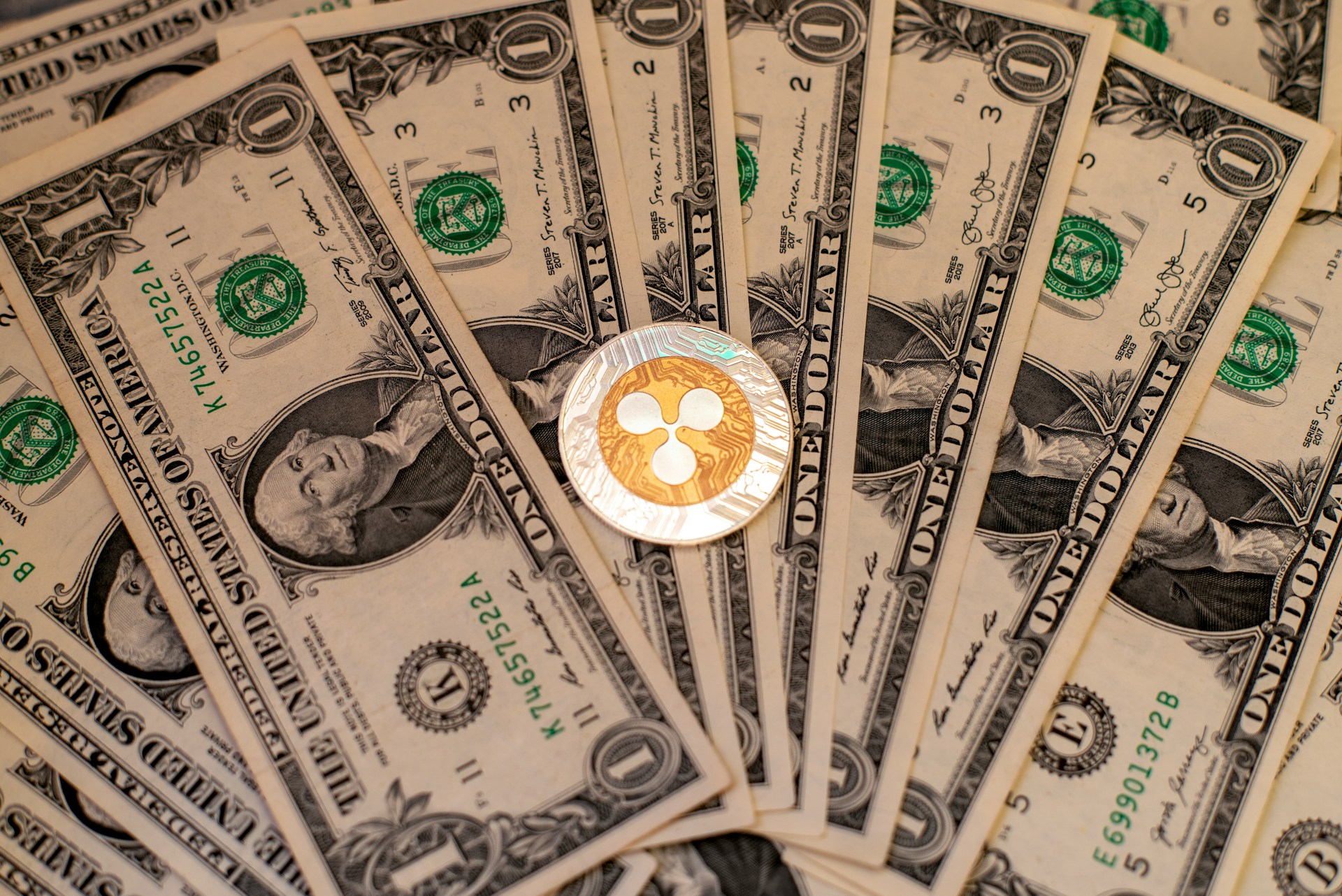
The cryptocurrency market has been grappling with significant volatility in early February 2026, yet Ripple (XRP) is emerging as a potential outlier in the current climate. Following President Donald Trump’s announcement regarding the creation of a new U.S. strategic crypto reserve—which notably includes XRP alongside other major digital assets—the token has seen renewed momentum, inching closer to the long-awaited $3 mark. While the broader market remains hesitant, new data models and institutional shifts suggest the asset may be approaching a critical turning point.
AI Models Project Three Scenarios for 2026
A recent, nuanced analysis by Gemini has generated considerable buzz by outlining three distinct price trajectories for XRP throughout 2026. These projections are heavily largely dependent on shifting macroeconomic conditions and the success of financial products currently entering the market.
In a bullish scenario, the AI model predicts XRP could surge to approximately $12.00. This outcome relies on inflows into newly approved XRP spot ETFs matching the volume and velocity previously seen with Ethereum ETFs. A more conservative forecast places the asset in the $3.00 to $4.00 range, essentially testing previous all-time highs. Conversely, should the general market continue to correct, the analysis identifies the $1.25 level as a critical psychological support zone, presenting a potential entry point for long-term investors.
Institutional Utility and Fundamentals
Underpinning these forecasts is the robust technical architecture of the XRP Ledger (XRPL). Developed by Ripple Labs, the network is designed to replace traditional banking systems that rely on pre-funded nostro accounts. By allowing financial institutions to bridge currencies instantly, XRP facilitates settlements in merely three to five seconds with fees as low as $0.0002 per transaction.
This utility has driven substantial global traction. Major financial players, including Santander, SBI Holdings, and Bank of America, have partnered with Ripple to leverage these payment solutions. Gemini’s analysis suggests that the expansion of Ripple’s payment network could push annual transaction flows past $1.5 trillion. Attention is specifically focused on the “XRP Community Day” on February 11, which is widely viewed as a pivotal date for the announcement of new strategic partnerships.
Technical Indicators and Sentiment
Beyond fundamental utility, technical indicators point toward a potential “short squeeze.” The Relative Strength Index (RSI) currently shows XRP as massively oversold, implying that a decoupling from the broader market is possible once the initial wave of U.S. institutional capital fully deploys.
Despite the optimistic modeling, XRP is currently trading around $1.30, weighed down by general market weakness. Market analysts warn that a sustainable rally for altcoins is unlikely unless Bitcoin can find a solid floor above the $60,000 threshold. However, Gemini notes that compared to Bitcoin and Ethereum, XRP currently boasts the most stable social sentiment. This “unshakable base” of holders could provide the edge needed for the token to emerge from the crypto winter ahead of its peers. Looking further ahead, some long-term forecasts are even more aggressive, predicting the asset could reach $26.97 by 2030.
Emerging Layer-II Developments
While established assets like XRP dominate the headlines, investors seeking to diversify during this volatile period are also tracking developments in Layer-II technologies, such as the Bitcoin Hyper project. This initiative aims to integrate Bitcoin into the Web3 ecosystem by utilizing the Solana Virtual Machine (SVM).
By enabling functions previously unavailable on the main Bitcoin chain—such as staking and lending—Bitcoin Hyper attempts to combine the security of the Bitcoin network with the high-speed execution of the Solana blockchain. Industry observers suggest that as the demand for DeFi utility on Bitcoin grows, tokens deeply embedded in this evolving ecosystem could see increased adoption alongside traditional payment networks like Ripple